
At present, the Met department is often unable to provide exact information on the exact amount of rain over a localised area.

Of these four flights (except Qatar Airways) returned to Kozhikode airport as the weather condition in Kozhikode gained normalcy.

Low temperature -- Delhi recorded a minimum of 13.5 degrees Celsius on Tuesday, the season's lowest so far -- allowed accumulation of pollutants, said Mahesh Palawat, vice president (meteorology and climate change), Skymet Weather.
The CII has suggested a 5-point agenda on the measures that need to be undertaken by central and state governments to stave off the adverse effects of a deficient monsoon. Let's find out what this agenda is. . .

Highly placed sources said that Singh was apprised of the agricultural situation across the country and officials expected that 95 per cent of sowing operations would be completed this month. The weather office expects monsoon to be near normal in July, which is crucial for the 235-million strong farming community.

The administration is geared up for more showers as the India meteorological department has warned of heavy to very heavy rains with isolated extremely heavy rains in several districts of the state till Thursday morning.

Rains were 26 per cent above normal across the country.

The IMD issued a 'red alert' for Pune district and asked people to take precautions.
After a week's delay due to Cyclone Phet, the south-west monsoon finally restarted on its course on Monday, according to the India Meteorological Department.

The India Meteorological Department said on Tuesday monsoon rains are expected to be below normal at 95 per cent of the long period average, with margin for error of plus or minus 4 per cent.

Food inflation further eased to 16.04 per cent for the week ended April 24, as arrival of rabi (winter) crops cooled down prices of essential items.

It will also be the third cyclone to hit the western state in June since 1965, the meteorological office said.

The IMD defines a normal monsoon as one which delivers between 96 and 104 per cent of the 50-year average rainfall for the season.

Flash floods triggered by a cloudburst in Mandi, Himachal Pradesh, resulted in casualties and widespread damage, prompting rescue operations and relief efforts.

India is likely to experience below-normal monsoon rainfall this year, with a 20 per cent chance of drought due to the end of La Nina conditions and the potential for El Nino to take hold, private forecasting agency Skymet Weather said on Monday.

Mohapatra said there is a 40 per cent chance of a normal rainfall, 22 per cent above normal, 12 per cent excess and 18 per cent below normal.
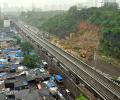
The south-bound traffic was diverted to another road, the fire control room official said, adding that work was on to remove the debris from the road.
